
Sui’s End Game: A Global Coordination Layer for Intelligent Assets

As everything goes digital, from money to assets to identity, we need a global coordination layer that sets the ground rules for how all these digital things interact.
A global coordination layer that removes the gatekeepers required by the current system, and eliminates the friction that comes with it. It's going to shake things up, make old business models obsolete, and create new ones we haven't even dreamed of yet. And that's the endgame of Sui.
How I Entered the Crypto Rabbit Hole
In late 2011, I stumbled upon Bitcoin. At first, it was just an intriguing white paper, but by 2012, I found myself mining Bitcoin, almost accidentally falling in love with the technology. It was then that I saw the potential for a global ledger, a single source of truth that everyone could work from.
As I built my cloud mining business and later moved into roles at Oracle, VMware, and eventually Facebook's Libra project, I began to see the bigger picture.
It became increasingly clear:
What we truly need is a coordination layer for the internet. A layer that can facilitate agreement and trust in our increasingly digital world.
This is what led me and my co-founders to create Mysten Labs, to build a blockchain that will become the global coordination layer of the Internet.
Why the Internet Desperately Needs a Coordination Layer

You see, we're going to go to a world of digitization where everything is going to be digital in some form or sense.
Firstly, money is going to be digital. In fact, it already is digital to a large extent, but it exists in fragmented, private databases.
When banks print money, each one does it independently, and we need a very complicated system, with multiple layers of (independent/asynchronous) infrastructure to try and coordinate the sending of money between parties, which increases costs, reduces trust and also, you know, actually makes things more complex.
It's hard.
It takes a longer time to reach agreement on what has actually happened. So you almost need an agreement layer for the internet, just to take away that unnecessary friction.
We've talked about money, but what about airline tickets? What about air miles? What about the title for my vehicle?
We've figured out that doing things the old-fashioned way, with paper and traditional methods, is full of friction. It slows us down. So we turned to digitization to speed things up and smooth out the process.
But here's the thing: even with everything going digital, we're still missing two crucial pieces:
First, we don't have a single, agreed-upon way to confirm what's happened or what's going to happen.
Second, we're lacking a system to create rules for these digital interactions.
And typically what happens is, you end up building a centralized party that can effectively become the rule bearers.
The System Itself Becomes Judge, Jury, and Executioner
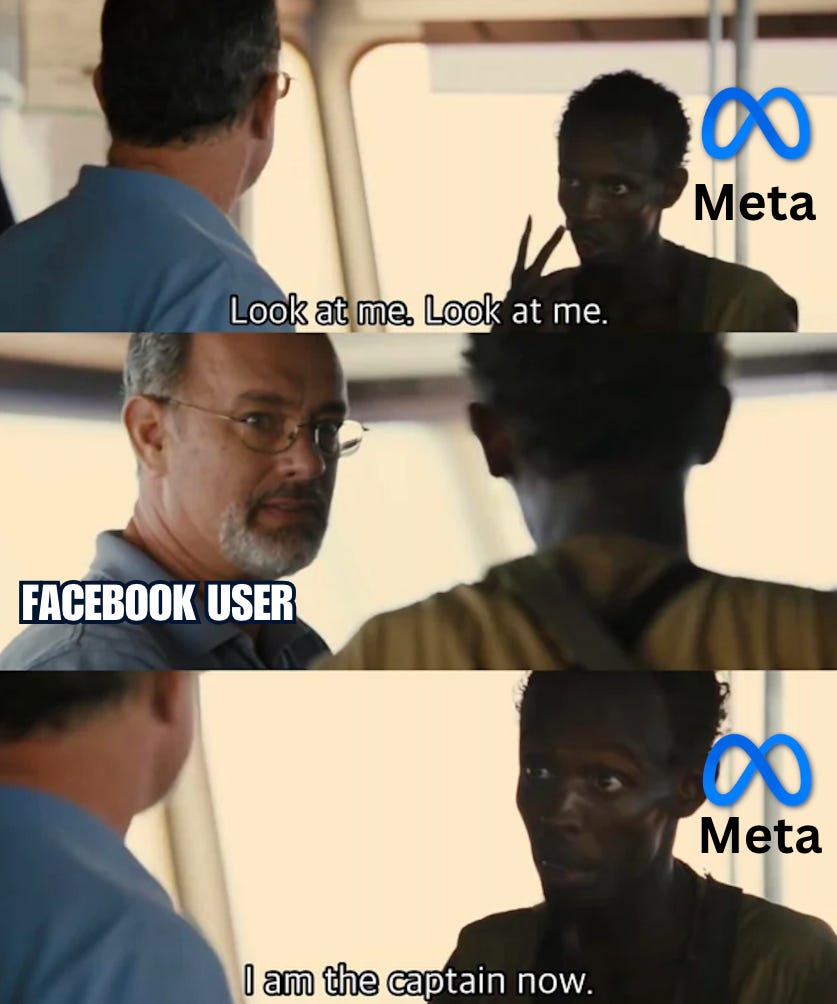
I always make the point that companies like Facebook or Google largely become a judge, jury, and executioner not because they're evil, but because it's convenient….for them!
Take Facebook, for instance. Now, I'm not here to bash Zuckerberg or call them the bad guys. But think about it, they've become this all-powerful entity on the internet, almost by accident.
They control your data: Every post, every like, every embarrassing photo from 2009, it's all in their hands.
They make the rules: Remember when they changed their algorithm and suddenly your posts weren't reaching anyone? Yeah, that.
They're the privacy police: GDPR, CCPA - Facebook's gotta deal with all that.
They're the judge, jury, and executioner of your online life, not because they're evil, but because that's how the system is set up.
It's a centralized entity and it is required by the law to basically adhere to rules and regulations around privacy and everything related. For that they need to hold user data, they need to build rules around what could be done around that data. So I think that to manage that machinery, you have to centralize everything to get value.
Now, you might be thinking, "So what? I get to use Facebook for free!"
But it's not actually free. We're paying with our creativity, our flexibility, and our potential to earn.
Think about it this way:
Creators are like renters on these platforms. They build their audience, their content, their brand, but they don't own the land it's built on.
Want to take your followers to another platform? Good luck with that.
Found a way to monetize your content that the platform doesn't like? Too bad, it's not going to happen.
So in having centralization, you gain some element of convenience, but you lose a lot of flexibility that could be afforded to, creators or builders or anything alike.
Now imagine if you are a dev or an entrepreneur and you want to build a payments app today. If you're not partnering with Visa, MasterCard, or American Express, you're out of luck. There's this massive barrier to entry.
It's not just about having a good idea anymore. It's about having the right connections, the deep pockets, and jumping through a million hoops just to get your foot in the door. For most devs and entrepreneurs, it's a non-starter.
But what if there was a global coordination layer where you could build the rules around money and just plug into it?
What if there were public rules of engagement that anyone could use?
Suddenly, accessibility becomes much broader.
Reimagining the Internet: A Frictionless Global Network
Now, when I say "coordination layer," I'm talking about a system that lets different parts of the internet talk to each other seamlessly. Think of it like a universal translator but for digital actions and assets.
Here's the thing:
Right now, if you want to book a trip to Paris, you've got to juggle a bunch of different websites and apps. You're booking flights on one site, hotels on another, and activities on yet another.
It's a hassle, right?
Now imagine if all of that could happen in one go, with everything talking to everything else. That's what a global coordination layer could do.
But it's not just about convenience or controlling your own data, it's also about massive value generation. This is where it gets really exciting. We're talking about unlocking trillions of dollars of value.
How?
By making it possible to create new types of businesses and services that we can't even imagine yet.
Remember Shopify?
When they started, people thought, "Oh, there's only 40,000 online stores. Even if you get half of them, it's not a big market."
Here, Tobi Lutke explains what the VCs who passed on Shopify got wrong:
But what happened? By making it easier to set up online stores, they created a whole new market. Now they've got over a million stores.
That's the kind of explosion we're talking about with a global coordination layer.
Here's why it's so powerful:
It makes everything composable. That means you can mix and match different services and assets in ways that weren't possible before.
It's democratic. Anyone can build on it, not just big tech companies.
It aligns with incentives. Imagine owning a piece of the infrastructure you use every day and paying for the services of that infrastructure using the same.
We're not just extending what exists. We're removing friction and multiplying possibilities. And just like how broadband opened up possibilities we couldn't have imagined with dial-up, this coordination layer is going to enable things we can't even conceive of right now.
So when I say this is a trillion-dollar opportunity, I'm not exaggerating. We're talking about fundamentally changing how the internet works, how businesses operate, and how value is created and shared.
It's a big vision, I know. But that's why we're building it. Because the internet as we know it? It's fractional. It's got borders. It's hard to coordinate across.
But with a global coordination layer, we can change all that. We can open up new opportunities, create new business models, and generate value in ways we can't even imagine yet.
Blockchain is the perfect solution for this, and Mysten Lab's core vision for Sui is to be the internet's coordination layer.
Sui: The Engine for Seamless Digital Interactions
Let me give you my mental model about how this is going to play out.
Bitcoin showed us that digitizing money could be done in a really trustless way.
Ethereum showed us that it's possible to have rules built around a ledger or money.
And what Sui is going to show is that not only can you digitize money, not only can you build rules around money, but you can build much more complicated structures or much more complicated rules of engagement around assets that are afforded by any other platform. And it needs to be done in a way that every developer can build.
Not just a very select few.
Why does this matter?
Well, remember when only a handful of people could create websites? Now your grandma can set up an online store. That's the kind of accessibility we're aiming for with Sui.
Now, you might be thinking, "Okay, but how is Sui going to make that happen?"
Our core product vision for Sui is that we see Sui as a product for developers. We're laser-focused on making Sui incredibly developer-friendly. That is our first and foremost priority.
Right now, there are only about 20,000 developers in all of web3.
For comparison, Facebook alone has around 50,000 engineers. The barrier to entry for blockchain development has been way too high. With Sui, we're changing that.
We've designed it so developers can learn our programming language Move in just a few days. Once they do, they can focus on building business logic instead of worrying about security issues or blockchain complexities.
We're giving developers the power to define assets however they want. They can create the rules around those assets, decide if they need regulatory oversight, and give ownership directly to users. This is a big shift from how things work now, where developers often have to act as gatekeepers for the assets they create.
And above all Sui enables true atomic composability. This means developers can combine different assets and actions in a single transaction. Think of it like being able to book a flight, hotel, and activities for a trip all at once, and if any part fails, the whole thing rolls back.
Sui’s programmable transaction blocks (PTBs) empower developers to accommodate up to 1,024 unique operations within a single PTB. This means that on Sui, you can combine 1,024 unique steps that execute a single transaction, and if one of those steps fails, the whole thing fails. It's all or none. The best part, developers can achieve this without having to write a single smart contract.
This is a game-changer.

This capability opens the door for creating applications with the kind of composability that is unimaginable in today's internet or any other blockchains that exist right now.
To create the right foundations to enable that level of flexibility and composability, we have created objects as the lowest computational unit of Sui.
This sets Sui apart from many other blockchains, which typically use account-based storage models centered around key-value pairs.
Creating The Right Foundations for A Global Coordination Layer
First off, we built Sui with a totally different mindset than other blockchains.
Most chains out there are still stuck in the Ethereum way of thinking. They use things like account models and global state, which falls apart when you try to build complex, scalable systems.
We threw all that out and started fresh. We asked ourselves, "What if we treated everything on the blockchain as an object?"
It's a complete rethink of how a blockchain can work.
In Sui, every asset is an object. Your NFT? It's an object. Your DeFi token? That's an object too. Even complex financial instruments or game items are just objects. This might sound simple, but it's incredibly powerful.
When everything is an object, developers can work with these assets in ways that feel natural and intuitive. If you've ever programmed in languages like Java or Python, you'll feel right at home. You can create, modify, and combine these objects just like you would in any other modern programming environment. With this approach, arbitrary layers of indirection between what you want to build and your data model is no longer a thing!
This approach also makes it much easier to reason about ownership and permissions. Each object has clear ownership rules, and you can easily set up complex permission structures if you need them. Want to create an asset that can only be modified under certain conditions? With objects, that's simple to express and enforce.
This also solves a bunch of problems that plague other blockchains. For one, it makes parallel processing way easier. In other chains, you often have to process transactions one after the other because you're not sure if they'll conflict.
With Sui, we can look at the objects a transaction touches and instantly know if it can be processed in parallel with others. This is huge for scalability.
It also makes composability a breeze without the need for interfaces. Want to combine different assets or actions in a single transaction? With objects, it's straightforward. You're just working with different objects, combining them in logical ways. This opens up a world of possibilities for creating complex, interacting systems.
But here's the most important part:
Security becomes much simpler. In other blockchains, developers often have to worry about all sorts of security issues like reentrancy attacks.
With Sui’s object model, many of these concerns just disappear. The rules about how objects can interact are baked into the system itself, so developers can focus on building cool stuff instead of constantly watching their backs for security holes.
By using this object-oriented model, we're giving developers the tools they need to build the next generation of blockchain applications. They can create truly intelligent assets - assets that have their own behaviors, that can interact with each other in complex ways, that can evolve over time.
This isn't just about making things easier for developers (though it definitely does that).
It's about enabling whole new categories of applications that just weren't possible before. We're laying the groundwork for a future where digital assets are as rich, complex, and interactive as anything in the physical world.
Now how do you scale this coordination platform to accommodate the global demand? How do you scale this system?
A Blockchain That Scales With Demand
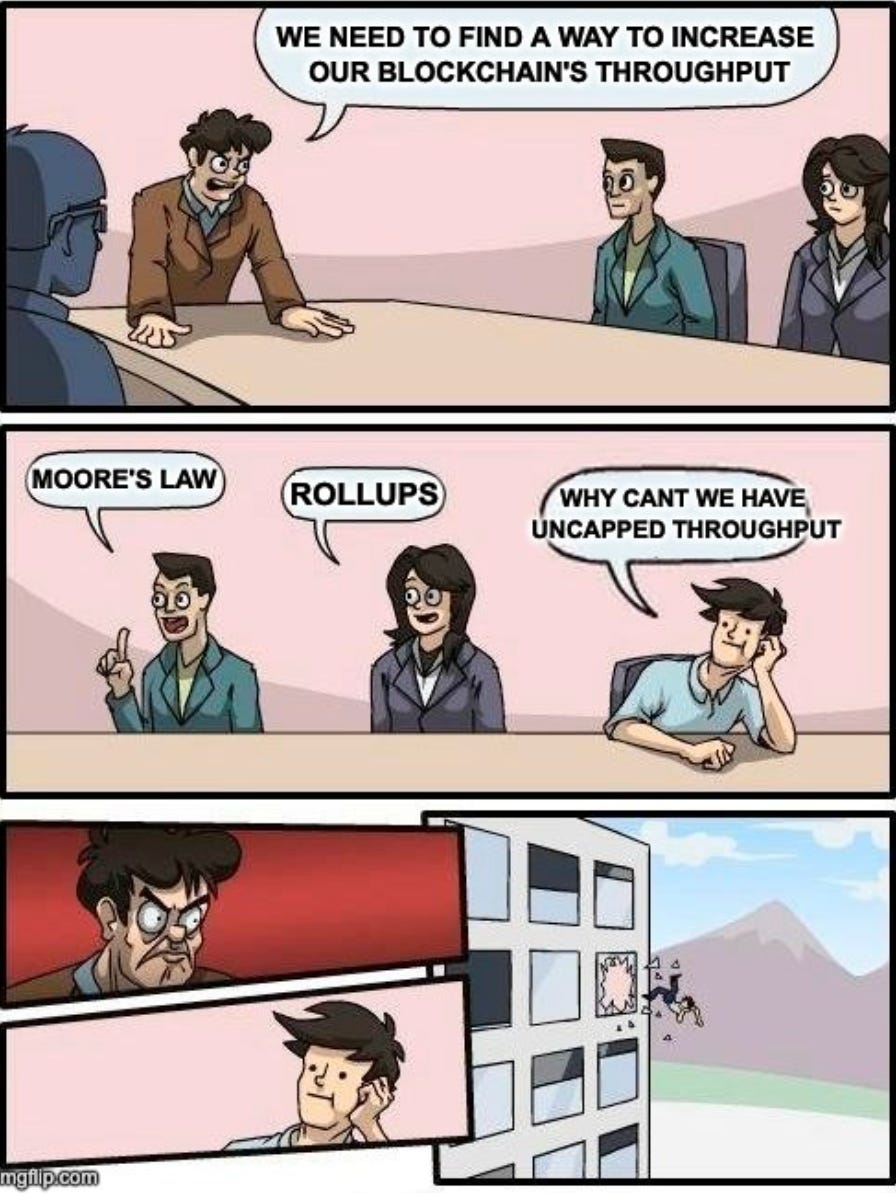
You know, nobody asks, "Can Google scale?" or "Can AWS scale?" They just figure it out.
So why are we asking if blockchains can scale?
Here's the thing:
Distributed systems have been around for a long time. We know how to handle workloads across clusters. It's not new.
The problem is that most blockchains are still stuck in the Bitcoin mindset.
They're using old models that just don't work for what we're trying to do.
At Mysten Labs, we're not building a blockchain with limited throughput. That doesn't make sense to us. We're bringing what I like to call "broadband to crypto":
We are building a blockchain with horizontally scalable throughput.
So how are we doing it?
Well, first off, Sui is the only chain that lets you go multi-machine without having to think about sharding domains. As a developer, you don't have to worry about which machine your state is on. There's just one address space, one global domain you work with. It's simpler, and it keeps everything composable.
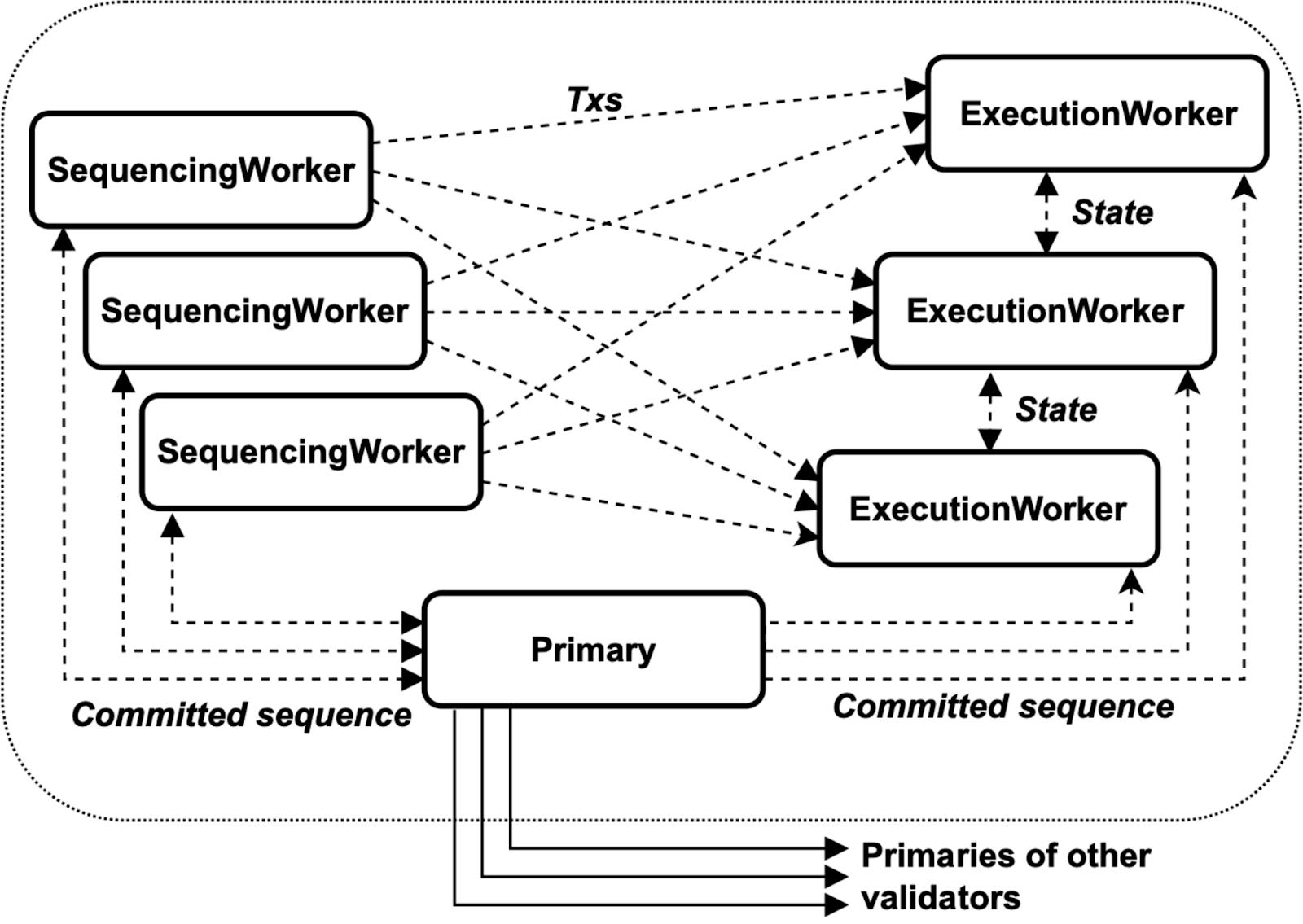
Think about it like this from the perspective of someone in NY:
If you have people queuing for a bus to Boston, a flight to London, and a taxi to Times Square, why would you put them all in one line? That's basically what other blockchains are doing.
Instead, we're giving each queue its own line.
This approach means we can parallelize execution really easily. If we know these objects don't interact, we can process them at the same time. And the more machines or CPUs we have, the more we can take advantage of this parallelization.
It's like how we built search engines or infrastructure at places like Facebook. You think about the smallest unit of compute and build around that, not abstract concepts like user accounts.
So when people ask if we can scale, my answer is: absolutely. We're not just trying to make transactions a bit faster. We're building a system that can grow and adapt as demand increases, just like the big tech companies do.
We're not limited by old blockchain models. We're bringing in the expertise and mindset from the world's top tech companies to solve these problems in a new way.
I have now walked you through the mental model we use at Mysten Labs to build Sui. But what is the real end game here? What are we going to ultimately achieve by building this global coordination layer that can accommodate the global demand?
The Real End Game of Sui
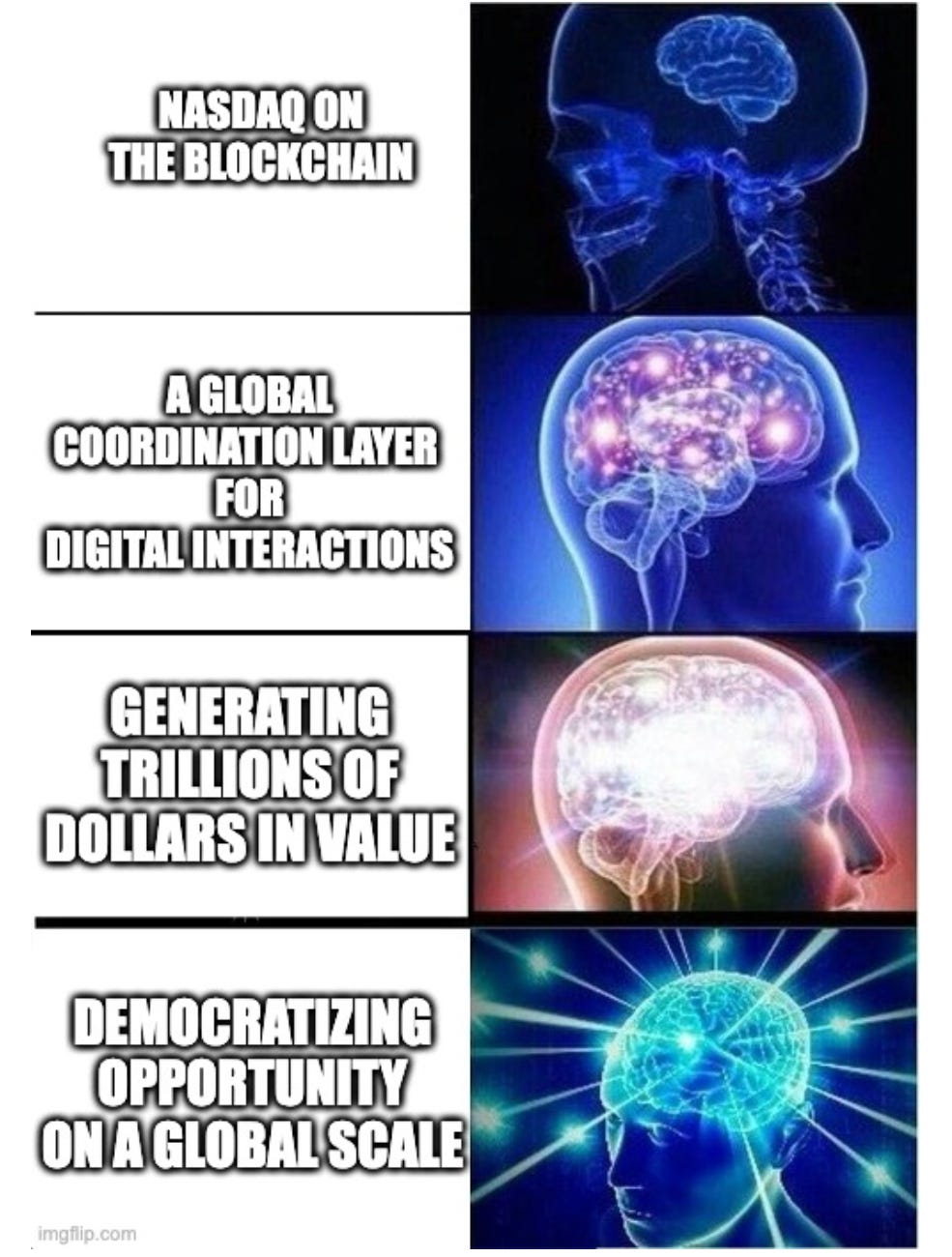
Our fundamental thesis is this:
If we can coordinate user intent across the internet in a composable, atomic way, we will create net new business opportunities for the next billion users as a whole.
That's what we're building with Sui. We're creating a way for people to coordinate their actions across the internet in a way that's smooth and seamless.
Think about it like this:
We're not just trying to make it easier to send USDC or whatever. Sure, that's nice, and it's already solved. The real game-changer is when you can coordinate all your day-to-day activities without any friction.
Every part of Sui's tech stack is designed to chip away at this friction:
PTB,
Our object-oriented model,
Our approach to scalability,
Walrus (Decentralized Storage),
Deepbook (next-gen decentralized CLOB)
Mysticeti (World’s fastest consensus protocol),
zkLogin (generates user accounts from OAuth credentials)
…you name it, it's all about making things smoother and easier.
That's when you start to see new products and services that just weren't possible before and create markets and opportunities that we can't even imagine yet.
But there's another piece to this puzzle:
Aligning incentives. Right now, you might own shares in Google or Tesla, but you can't actually use those shares to pay for their services. There's a disconnect there.
We're talking about a model where users are not just customers, but owners. Where the value generated by the network is shared by the network. Where your incentives are aligned with the growth and success of the entire ecosystem. That's the future we're building towards.
And the potential value of that?
It's staggering. We're talking trillions of dollars. Because when you remove friction, when you align incentives, when you open up new possibilities, the value created is exponential.
But the real end game is even bigger than that.
This isn't just about new business models or markets. It's about creating a force for societal evolution. It's about democratizing opportunity in a way that's never been possible before.
With Sui, we're building something that's open-source, community-driven, and fundamentally democratic. We're creating a platform where anyone, anywhere, can participate and have a voice. That's the real end game.
A world where the internet is not just a tool, but a level playing field. Where anyone with an idea and a drive can create value and share in the rewards. Where the power is in the hands of the many, not the few.
It's a big vision, I know. But that's what we're building towards every single day. With every line of code, every partnership, every person who joins our community, we're getting one step closer to that future.
And that, my friends, is what gets me excited to come to work every morning, and it's a vision that I believe in with every fiber of my being.
If you are curious why we are so laser-focused on making the DevEx on Sui superior to every other blockchain out there, stay tuned and subscribe to my fresh Substack so you don't miss it👇

sui is the the future of next genaration block chains
Dear Adeniyi.sui,
I recently read this Substack post, "Sui’s End Game: A Global Coordination Network", and I wanted to take a moment to express my admiration for the bold vision you outlined. Your ideas about Sui becoming a foundational layer for global coordination resonated deeply with me, especially as they align with some of the principles I learned during my MBA studies (Entrepreneurship & Innovation) long ago…
Your vision reminded me of Schumpeter’s theory of creative destruction—how groundbreaking technologies remove inefficiencies and give rise to entirely new possibilities. The idea that Sui can act as a frictionless, scalable backbone for the decentralized internet is a perfect illustration of this transformative process. By tackling scalability, affordability, and composability, you’re not only addressing Web3’s biggest challenges but also enabling applications and opportunities we can only begin to imagine.
It’s incredibly inspiring to see your team push forward with such ambition and clarity, even in an ever-evolving and often uncertain space like blockchain. Your vision doesn’t just aim to solve problems—it actively redefines the possibilities for coordination, collaboration, and value creation in a decentralized world.
I have been in this crypto game for a while… but I truly think you guys have a great vision! Plus it is one I have been waiting for since many years (I can still remember IPFS and crypto kitties as a first fun and practical use case)
Thank you for daring to think big and pursue innovative ideas with Sui. It’s this kind of thinking that has the power to reshape industries and lay the foundation for a brighter, more interconnected digital future. I look forward to seeing how Sui continues to bring this vision to life.
Wishing you and the entire Sui team continued success in pushing boundaries and leading change!
Warm regards,
Nicolas Axe
walrmeme.sui
#InspiredBySui